






Introduction
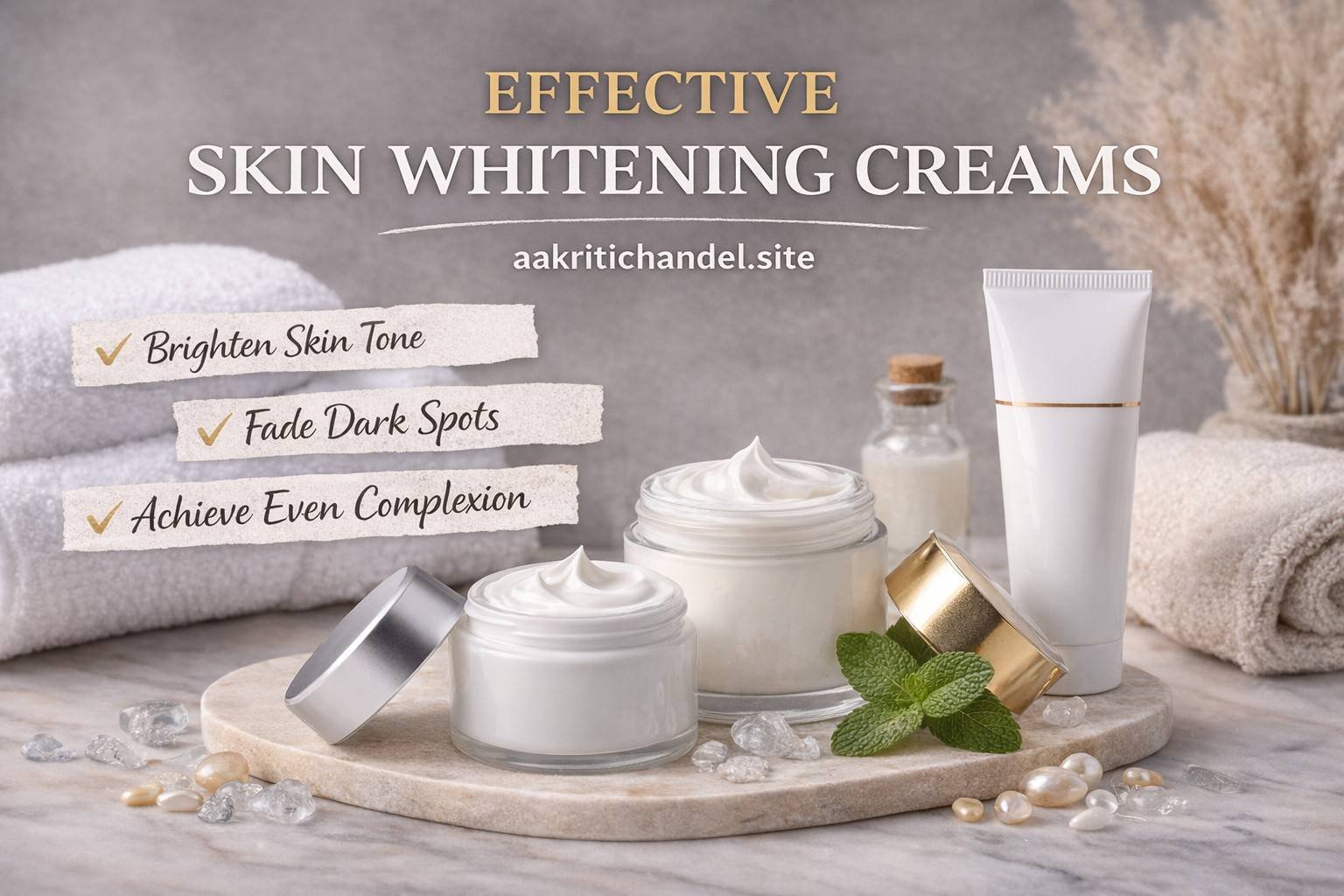
Skin whitening creams appear to be an easy solution. Spots on skin? Disappeared. Rough skin? Sorted. That is the sale offered.
However, if you’ve sampled the above remedy, you probably recognize that the process is complicated.
A Few Products Do Work. Those mess up your skin in ways that take months to undo. Most people don’t know the difference until it’s too late in Skin Whitening Creams.
So instead of chasing a lighter skin tone, it makes more sense to understand just what these creams actually do and whether they are even worth it.
What are the effects of these skin whitening creams ?
First of all, they don’t affect your natural skin tone.
They are able to depigment skin problems—like acne spots, tanning, or patches. That’s all.
The word “brightening” is technically more accurate than “skin whitening creams,” but that doesn’t sell as well.
Why Does Pigmentation Happen In The First Place?
Your skin whitening creams create melanin. That is the reason it gets colour.
At times, it creates an excess in certain areas. That’s when you get blemishes, spots, or unevenness.
Reasons, please.
- Excessive sunshine.
- Changes in hormones.
- Previous Acne
- Annoyance.
Most creams just try to slow down this process a bit. Introduction
The introduction skin whitening creams is the first part of your paper. It has to be engaging and make the reader feel interested in reading the rest of your essay. In this case, you should start with a fact or something that is not commonly known about your topic Skin Whitening Creams.
Skin whitening creams marketed like they’re magic. A matter of weeks, a few applications, and suddenly your skin is brighter, clearer, and “better.”
That’s the thought, at any rate.
When it comes down to reality, it’s a bag of mixed things. There are some products that really help with pigmentation. Be careful not to let others damage your skin. Your usage and the specific usage determine a lot of the efficacy.
How these skin whitening creams truly function
Although it has the term “whiten,” it does not actually whiten your skin.
Most of them work on dark spots, acne marks, or uneven patches by reducing excess melanin in that area. Your skin’s natural tone does not change.
Are they safe, though?
There are times when the formula works, and most likely you’ll be alright if you’re using it properly. However, if you are using the product too often, it could be due to harsh or banned ingredients.
Ingredients that often work well
- Niacinamide has shown the most promise. It is mild and works for most people.
- Vitamin C is another fantastic choice. It assists with brightness, though it can be a bit unstable depending on the formulation.
- Alpha arbutin and kojic acid are often used to treat pigmentation. You can use them, but don’t expect overnight success.
- Licorice extract is gentler and more soothing, especially if your skin is very sensitive.
Things you should think twice about
- Mercury is definitely not okay. Don’t use it if it contains a product.
- Hydroquinone can be effective, but only under a dermatologist’s recommendation. Don’t use this casually unless told to.
- Another problem is steroids in creams. Some products have them without stating so clearly, and this can lead to thinning skin and breakouts.
Could this go wrong
Your skin might react quickly if a product doesn’t suit you, resulting in irritation, redness, or bumps.
The worst things could get are long-term sensitivity or uneven discoloration, which is tougher to fix than the original.
What Helps More Than Creams
Sunscreen does more for your skin tone than most whitening creams do.
If you want glowing skin, then you should also implement the beauty routine effectively to get results.
Selecting an appropriate product
- Examine the components. It is the major thing.
- Choose brands that you trust.
- Disregard anything that offers flashy results in a matter of days. That is usually a sign of trouble.
Conclusion or Underlying thoughts
To have good skin, you don’t need to change your complexion.
Try to keep it healthy. The brightness and evenness of tone will usually follow.
Are skin-whitening creams safe?
It depends on your usage.
There is no single answer. Certain ingredients have undergone thorough testing. Some people don’t care.
In truth, much of the harm caused by product usage stems from people overusing products or from not knowing what is in them.
The safer elements.
Generally, it seems like you’re on safer ground if you see these.
- Niacinamide is effective and very difficult to screw up.
- Vitamin C is ideal for dull skin but works slowly.
- Alpha arbutin is gentle but takes time to work.
- Kojic acid is effective but may irritate some people.
- Extract from the licorice plant, gentle and soothing.
Nothing here yields instant results. That is a good thing.
The dangerous ones.
Take caution in this specific area.
- Mercury continues to appear in dubious products, which cause toxicity.
- Hydroquinone works but only after a doctor’s prescription.
- Concealed anabolic steroids are quick fixes that come with lasting damage.
Why something that works too quickly usually has a reason.
What can harmful products do to your skin?
You will usually notice it early.
- Rouge.
- Blazing.
- Eruptions.
People think it is “working”; sometimes people ignore it. But it’s not.
It could be thought of differently.
Stronger skin whitening creams aren’t necessary for relatively better skin.
Sunscreen, in itself, prevents a huge chunk of pigmentation. With a bit of water and a good, simple routine, your patience will pay.
Yes, slower; however, safer.
In conclusion
You may end up feeling frustrated if you are trying to make your skin “white.”
Making sure it works? That truly functions.
author bio
Aakriti Chandel is a skincare writer and wellness researcher dedicated to simplifying skincare for everyday users. With a focus on practical, evidence-based advice, Aman helps readers make informed decisions without falling for marketing hype. His work promotes simple, effective, and affordable skincare routines for long-term skin health.